
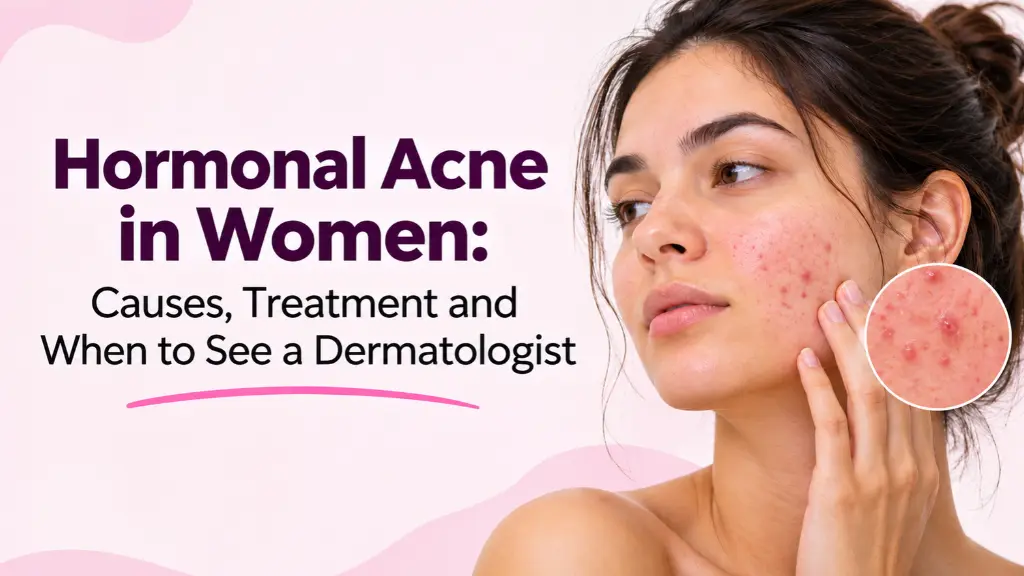
Hormonal acne in women
Deep, tender spots along the jaw that flare before every period are a familiar story, and Sri Lanka’s heat does not help. This guide covers what usually triggers hormonal acne, what a dermatologist can offer, and some gentle basics from Glow Marketing.
What causes hormonal acne
Hormonal acne happens when androgens such as testosterone raise oil production, which can clog and inflame pores. Triggers include the menstrual cycle, postpartum changes, perimenopause and stress, and sweating can add to it. It often shows up as tender bumps on the jaw, chin and neck. The NHS also lists polycystic ovary syndrome (PCOS) as a cause, so irregular periods or extra facial or body hair alongside the spots are worth mentioning to a doctor.
Treatment options for hormonal acne
Over-the-counter salicylic acid or benzoyl peroxide can help mild cases. When they fall short, a doctor may prescribe a retinoid such as adapalene or tretinoin, a short course of topical antibiotics, the combined contraceptive pill, spironolactone (sometimes used off-label), or isotretinoin for severe acne. These need medical supervision, and some are unsuitable in pregnancy.
Supporting your skin at home
Wash morning and evening and after sweating, and avoid picking or scrubbing. CeraVe Blemish Control Cleanser 236ml contains 2% salicylic acid, niacinamide and ceramides and is made for acne-prone, oily skin (Rs 9,250 at the time of writing).
Balance Active Formula Niacinamide Blemish Recovery Serum 30ml has 15% niacinamide and zinc PCA and is fragrance-free (Rs 6,250). Its page advises a patch test and keeping vitamin C or retinol in a separate routine.
Finish with a light moisturiser and sunscreen. CeraVe Fluide Invisible Toucher Sec SPF 50+ is a dry-touch fluid listed for acne-prone skin (Rs 10,400).
Common mistakes with hormonal acne
Picking spots, scrubbing hard and layering several actives at once are the usual ones. Retinoids can make skin look worse for the first week or so, and results take weeks to show.
When to see a dermatologist for hormonal acne
Book a visit if breakouts last several months, over-the-counter products are not working, spots are deep and painful, or acne is leaving scars or dark marks. A check-up also makes sense if irregular periods or excess hair come with the spots, since hormonal acne can point to an underlying condition such as PCOS. For supportive skincare, browse the serums range at glowmarketing.lk, and speak with a qualified dermatologist for personal guidance.
FAQ
01. What does hormonal acne look like?
It often appears as tender, reddish bumps on the lower face, such as the jaw and chin, and on the neck. It tends to cause fewer blackheads and whiteheads than teenage acne.
02. Can stress or sweating make hormonal acne worse?
Yes. Stress raises cortisol, which can increase oil production, and heat and sweat can clog pores. Wash after sweating, and manage stress and sleep where you can.
03. Does PCOS cause acne?
It can. The NHS lists oily skin and acne among the symptoms of PCOS, along with irregular periods and excess hair growth. See your doctor if these appear together, since PCOS needs a proper assessment.
04. Can skincare products clear hormonal acne on their own?
They can support the skin but may not be enough. Gentle cleansing, non-comedogenic products and sunscreen cover the basics, but persistent or deeper hormonal acne often needs treatment from a doctor.
05. When should I see a dermatologist?
See one if breakouts continue for several months, over-the-counter products do not help, spots are deep and painful, acne is leaving scars or dark marks, or it is affecting your mood.
Leave a Reply