
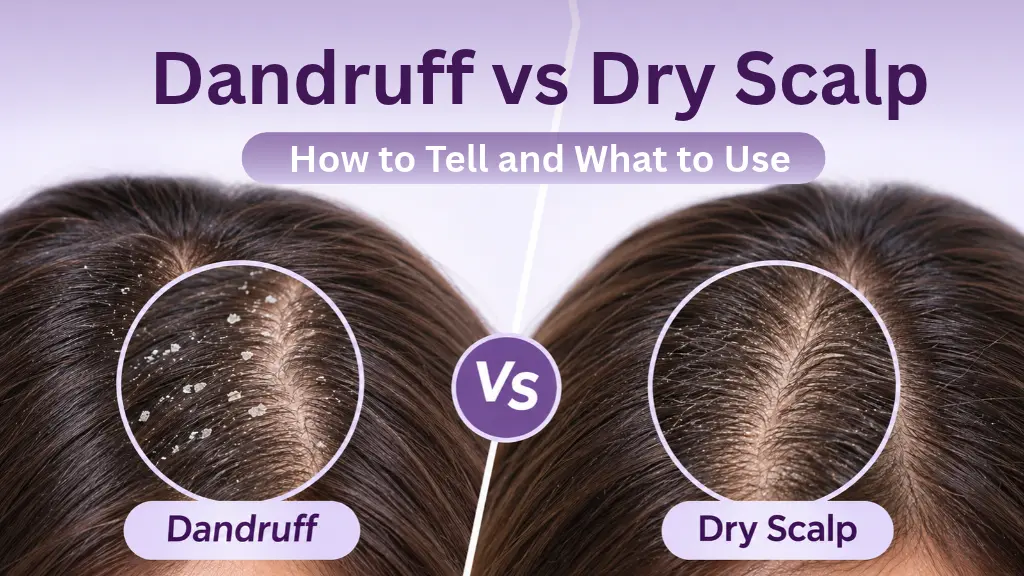
Dandruff vs dry scalp
Flakes on dark clothes are easy to blame on dandruff, but a dry scalp can look almost the same. The two need different care, so here is how to tell them apart and which products from Glow Marketing suit each.
How to tell dandruff from dry scalp
Look at the flakes and at the scalp underneath. Dandruff flakes tend to be larger, yellowish or white and a little oily, on a scalp that is often oily and may look red. A dry scalp gives small, fine, dry white flakes with little or no redness, and you may have dry skin elsewhere. Both can itch, and some people have both.
A simple test: rub a light moisturiser into the scalp before bed. If the flakes are gone after your morning wash, dryness is the likelier cause.
What causes each
Dandruff is linked to a yeast on the skin, oil and stress. The NHS says it is not caused by poor hygiene. Dry scalp comes from washing too often, harsh products, low-humidity air or eczema.
What to use for dandruff
Look for an anti-dandruff shampoo containing zinc pyrithione, ketoconazole, selenium sulfide, coal tar or salicylic acid. Head & Shoulders Classic Clean Anti Dandruff Shampoo 1000ml contains zinc pyrithione. Neutrogena T/Gel Anti Dandruff Scalp Relief Shampoo 250ml contains coal tar extract and is designed to reduce flaking and soothe an itchy scalp. The NHS suggests trying a shampoo for up to four weeks before judging it.
What to use for dry scalp
Choose a gentle, moisturising shampoo, wash less often and avoid alcohol-based styling products. Cantu Shea Butter Cleansing Cream Shampoo 400ml is a sulfate-free formula with shea butter, made to cleanse without stripping moisture, especially for textured hair. If a product stings, stop using it.
Common mistakes with dry scalp and dandruff
Scratching, washing daily with a harsh shampoo and giving up on a treatment after a week are the usual ones. Another is using an anti-dandruff shampoo when the scalp only needs moisture.
When to see a dermatologist for dry scalp
See a dermatologist if flaking has not improved after about four weeks of anti-dandruff shampoo. Go sooner if the scalp is very itchy, red, swollen or sore, you have flaky patches on your face or body, or you notice hair loss. Browse the hair shampoo range at glowmarketing.lk, and speak with a qualified dermatologist for personal guidance.
FAQ
01. What is the main difference between dandruff and dry scalp?
Dandruff flakes are larger, yellowish or white and oily, often on an oily, sometimes red scalp. Dry scalp flakes are small, fine and white, on a scalp that feels dry without much redness.
02. Can I have dandruff and dry scalp at the same time?
Yes. Treatment may need adjusting: a medicated shampoo for the dandruff, plus gentler washing and moisturising care for the dryness.
03. How often should I use anti-dandruff shampoo?
Follow the product directions, since this varies by ingredient. Medicated shampoos are often used two to three times a week, and over-washing can worsen dryness. The NHS suggests trying one for up to four weeks.
04. Can I use the same shampoo for dandruff and dry scalp?
Usually not. Dandruff tends to need a medicated shampoo, while a dry scalp does better with a gentle, moisturising one. Using a medicated shampoo on a scalp that is only dry can leave it drier.
05. Is dandruff contagious or caused by poor hygiene?
No. The NHS says dandruff cannot be caught from others and is not caused by poor hygiene, though it may show more if hair is not washed often.
Leave a Reply